
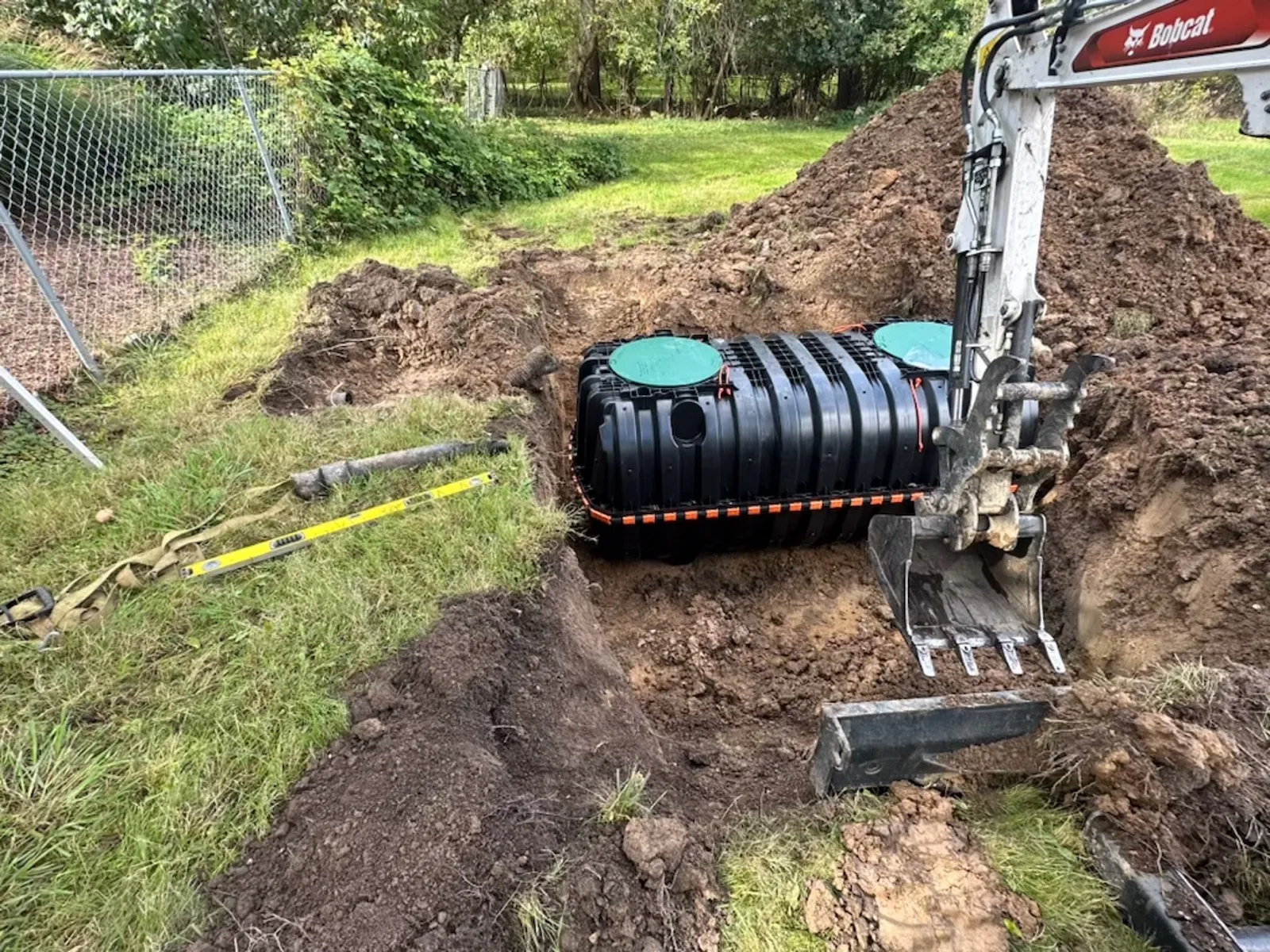
How much does a septic system cost in Vermont?
Most Vermont homeowners end up somewhere between $4,000 and $12,500 for a full septic system installation, based on the national ranges published by HomeAdvisor, Today’s Homeowner, and Bob Vila. A conventional in-ground system on good soil sits at the low end, around $3,000 to $8,000. A mound system, which many Vermont lots need because of ledge or a high water table, runs $10,000 to $20,000. The state permit itself is the cheap part: $306.25 for a typical home.
The honest answer under those numbers: your soil decides your price. Everything below explains how, using the actual Vermont rules and published market figures, so you can see where your lot is likely to land before anyone quotes you. Our septic system installation page covers how the build itself runs.
The national numbers, as a starting point
No government source publishes a Vermont-specific installation average, so the honest baseline is the national data, with the Vermont factors layered on top.
| Item | Typical cost | Source |
|---|---|---|
| Full system install, average | $8,011 to $8,019 | Today’s Homeowner, HomeAdvisor |
| Full system install, range | $3,589 to $12,463 | HomeAdvisor |
| Conventional gravity system | $3,000 to $8,000 | Today’s Homeowner, HomeAdvisor |
| Mound system | $10,000 to $20,000 | Today’s Homeowner, HomeAdvisor |
| 1,000 gallon tank alone | $600 to $1,500 | Bob Vila, HomeAdvisor |
| Drain field replacement | around $7,000 | HomeAdvisor, Bob Vila |
| Excavation portion | $1,500 to $6,000 | Today’s Homeowner |
| Soil testing | $1,000 to $2,000 | Bob Vila |
Vermont sites tend to land above the national midpoint when the ground is difficult, and at or below it when a lot has deep, well-drained soil. The reason is in the rules.
The permit is the cheapest line on the whole job
Vermont septic work runs on one state permit: the Wastewater System and Potable Water Supply Permit, issued by the Department of Environmental Conservation. The current fee schedule puts the application at $306.25 for any design flow of 560 gallons per day or less.
Design flow is set by bedrooms, at 70 gallons per day per person with minimum occupancy rules. Run the math and a five bedroom home comes out at exactly 560 gallons per day. So nearly every single family home in the state pays $306.25. National cost guides list permits at $450 to $2,300, and that range simply is not Vermont.
What costs real money before the dig is the design. Vermont requires every system to be designed by a state licensed designer, who digs test pits, reads the soil, and draws the plan the permit is issued on. There is no homeowner design path. We help you line up a designer at the start, then build exactly what the approved plan calls for.
Why ledge pushes Vermont lots into mound territory
Here is the rule that moves the price more than any other. For an in-ground drain field, Vermont requires 48 inches of naturally occurring soil to bedrock beneath the field, and 36 inches to the seasonal high water table. For a mound, the requirement drops to 24 inches of natural soil below the ground surface.
Around Pownal, Bennington, and the hill towns on all three sides of the state line, ledge within a few feet of the surface is normal. A lot with 30 inches of soil over rock cannot hold an in-ground field. It can hold a mound. That single test-pit reading is the difference between the $3,000 to $8,000 conventional range and the $10,000 to $20,000 mound range, because a mound is built from trucked-in sand and fill, dosed by a pump.
Two more Vermont rules worth knowing before you budget:
- A garbage disposal triggers a 50 percent tank capacity increase. The standard 1,000 gallon tank becomes 1,500 gallons.
- Every new system also needs a designated replacement area, a second patch of ground that passes the same soil tests. On a tight or rocky lot, qualifying that second area can be the hard part.
The calendar matters on wet lots
If your lot needs water table monitoring, the designer has to propose it to the state by March 1 and take readings between March 1 and May 31. Miss that window and the project can slide a full year. This is the single best reason to call early. A site conversation in the fall sets up soil work in the spring and a dig in the summer, all inside one season.
Frost and mud season shape the schedule too. The digging season here runs late spring through fall, and the ground around a fresh install settles best with a full season before winter. Our grading and site prep work follows the same calendar.
Repair before replacement, when the tank is sound
Not every septic problem is a new system. A crushed pipe, a failed baffle, or a clogged line is repair work at a fraction of replacement cost. HomeAdvisor puts average septic repairs at $627 to $3,040, against the five-figure replacement. The septic repair page covers how we diagnose which one you actually have.
The cheapest protection of all is pumping. EPA guidance calls for pumping every three to five years. At a few hundred dollars a visit, twenty years of pumping costs less than half of one drain field, and the field is the part that cannot be repaired once solids seal it off.
What we quote from
Every number above is a published market range or a state fee, not a quote. Your number comes from the ground: the test pit results, the system type the design lands on, the slope, and the access. We look at the site free, tell you which range your lot is realistically in, and put a real figure on it once the design exists. Call (802) 681-6842.